Check which arrangement the video demonstrates
One song can have several keys, arrangements and accompaniment patterns. Compare the video title, description and opening bars with your score. If the recording includes extra instruments or added chords, you do not need to reproduce every sound. Follow the arrangement you are studying.
Listen once before playing along
Follow the score through one listening, tracing the bars as you go. Notice where phrases begin and end, and identify rests or repeats. Then choose two to four bars and count them yourself. This helps distinguish a reading, rhythm or coordination problem from simply guessing finger positions on screen.
Alternate focused listening and practice
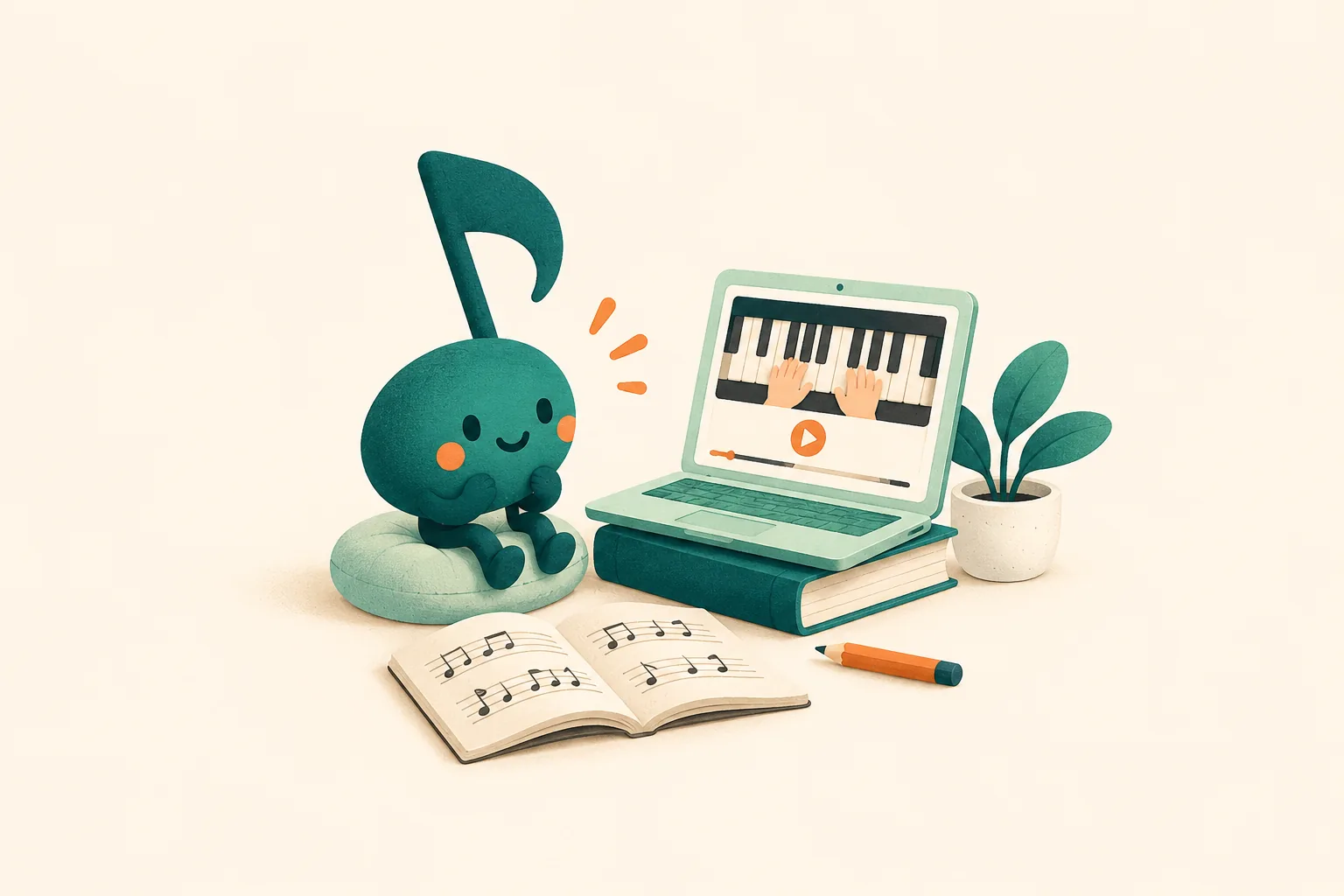
Try a short cycle: listen to a passage, pause, practise each hand slowly, then combine them at a controllable tempo. Listen again to compare pulse and melody. Slower video playback can help you hear details, but matching the original speed should wait until your own notes and rhythm are steady.
Use book-page videos when they are available
Books with published linked clips show a Watch & Listen section. You can view a clip on the page or open it on YouTube, then return to the score. If the section is absent, that book does not yet have a published linked clip. Ask LINE @notepiano about available examples. A video supports listening; it is not the complete purchased eBook.
A common question
Must I match the video’s speed before moving on?
No. Consider the piece’s learning goal and your teacher’s advice. Assess note accuracy, a steady pulse and melodic listening together. The video is a reference, not a speed test.